Project Overview
Location: Umaria, Central India
Dates: August 2024 – February 2025
Trainers: Peter Otiende, Isaac Atsiaya Lihanda, Ajmat Khan
Previous Circumstances
- Industrial agriculture has introduced artificial pesticides, fertilizers, and hybrid seeds, reducing food nutritional value, biodiversity, and soil health.
- The Indian government distributes a single hybrid rice variety requiring heavy chemical use, influenced by corporations like Monsanto.
- Summer temperatures exceed 50°C, exacerbating water shortages, with some women walking 3km to fetch water.
- Families could grow vegetables only 3-4 months a year and faced overpriced market vegetables, as expressed in a song during our visit.
- Gender discrimination limits women’s voices, with one villager noting, “One problem of women is they can’t speak.”
- Men often migrate thousands of kilometers for contract labor, leading to family separation and mental health issues like depression.
- Diseases like dysentery and typhoid are prevalent, with the nearest hospital 50km away for some villages.
Positive Changes
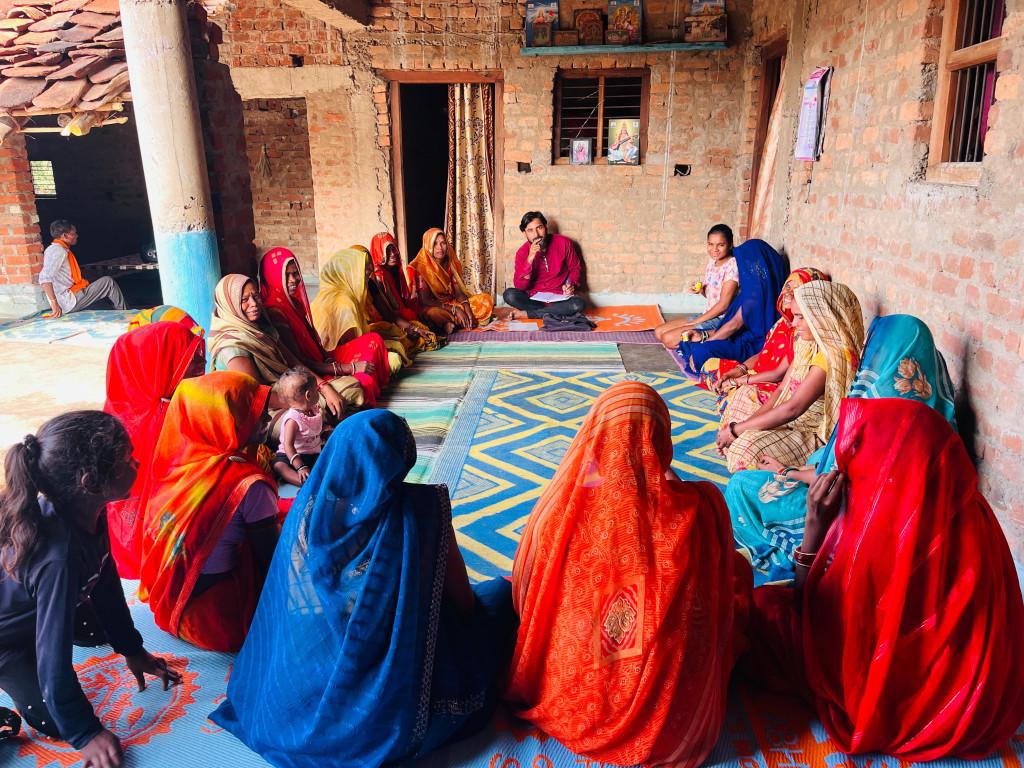
In February 2025, our team visited Umaria, led by Ajmat Khan. A group of women—Radha, Lakshmi Singh, Nirmala, Shashakti, Utra, Pujabai, and Purmila—shared that their permagarden yielded three harvests in seven months. They no longer need to buy vegetables from the market and expressed joy in their self-sufficiency.
Ajmat Khan noted that permagardens sparked a community shift toward natural farming, including preserving native seeds and reducing market dependency.
Middle school students were inspired, observing Peter Otiende and Isaac Atsiaya Lihanda improve a permagarden. Several students eagerly participated and planned to create their own gardens at home to avoid market expenses.
Sanman Baiga shared, “I will use funds saved from the garden to pay for my child’s education.”
Existing Solutions Combined with Permagardens
- Seed Bank: Preserves native varieties of millet, rice, nigella, sesame, and more. It doubles as an educational space with recipes for seed, water, and soil treatment, achieving a zero seed mortality rate.
- Seed Sharing Ritual: Includes distributing seeds to other villages, fostering community collaboration.
- Khulia Gardens: An ancient tribal garden technique similar to permagardens, enabling vegetable growth for up to 9 months a year.
Future Outlook
The Permagardens Foundation is funding travel expenses for Ajmat’s volunteers, who are spreading permagarden techniques across villages. Support this mission by contributing today!