

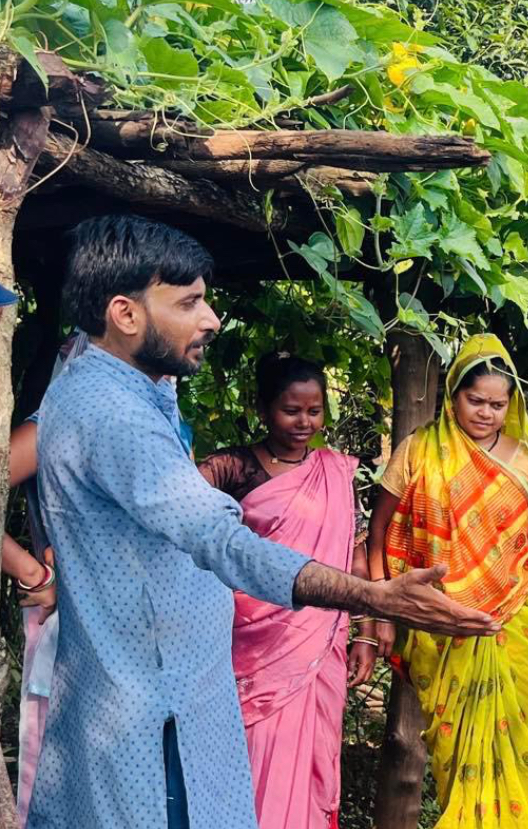
I was born in Shahdol, Madhya Pradesh, in the heart of Central India. In 2003, while pursuing my education, I became involved with the Sarvodaya Youth Organization, inspired by Gandhian ideology. This journey introduced me to the tribal belts of the region, where I began working on the rights of Adivasi communities over jal, jungle, and zameen (water, forest, and land).
In 2005, I joined the Tribal Land Movement, which proved to be a turning point in my social journey. I worked closely with 7,500 people across 25 villages, focusing on youth leadership, health, nutrition, sustainable livelihoods, and the vision of Gram Swaraj. To strengthen community participation, we formed 25 youth and women’s collectives, who took the lead in identifying and addressing local issues.
We promoted community-driven solutions like permagardens and biosand water filters, which brought tangible improvements in nutrition and a significant reduction in waterborne diseases.
It has been a privilege to be associated with the Permagarden model. Over the years, I have realized how critical food is for people, especially in tribal regions. However, due to the changing climate, communities are increasingly dependent on the market, and resources like water, seeds, and fertile land are becoming scarce. In our village, people get vegetables for only 3 to 4 months in a year. If we can ensure year-round access to vegetables through permagardens, it will be a matter of deep satisfaction and pride for me — especially when I see smiles on the faces of children and women.
My work has also expanded to the national level through the National Youth Organisation, and currently, through the Navsarjan Vikas Samvad Samiti, I continue to work in areas of community health, nutrition, livelihoods, children’s education, water conservation, village industries, and leadership development, rooted in the principles of equity, dignity, and self-reliance.