

What are permagardens, and what gives them an advantage?
| # | Regular Gardens | Permagardens |
|---|---|---|
| 1 | Often require expensive materials | Uses only locally accessible tools and supplies |
| 2 | In a space where “row planting” grows nine plants | Triangular planting grows 14 plants in the same space, creating a closed canopy for better moisture retention and solar gain |
| 3 | Subsoil is left infertile | Subsoil is aerated and amended, creating a nutrient and water “bank” beneath the topsoil |
| 4 | Need watering 2x per DAY during dry season | Need watering 2x per WEEK during the first dry season, then even less while producing food year-round |
| 5 | Many have hydrophobic soil and lack structure to capture available water | Contains a strategic structure of berms and swales to capture and channel runoff water — Learn more |
How Permagardens Can Help Solve Problems
Can grow 5x amount that a regular garden can grow. Works in dry seasons and droughts (once water from rainy season has been captured by the nourished soil)
Vitamin- and mineral-rich food meets nutrient needs of children at critical stages of mental & physical development
Reduces need to buy food and need to grow cash crops for income —> families become less vulnerable to changes in market conditions
Healthy moist soil under garden is capable of long-term water storage
Captures water from heavy rains (which can destroy other types of gardens), stores it deep within the subsoil from which it can be drawn upward by healthy root systems
Uses only organic carbon-based material to supplement soil and repel pests
The method encourages use of & sharing of native seeds, and reduces dependence on GMO crops. These were among the effects of our permagardens initiation in Umaria, for instance
Localizes the food system; increases soil health, facilitating carbon sequestration
Adequate nutrition —> increases capacity to solve larger issues, encourages community cooperation.
With nourished bodies and minds, children have greater capacity to focus and process lessons in school — and are more likely to educate their families about what they’re learning!
Variety and abundance of food next to home —> humans no longer have to search forests for food
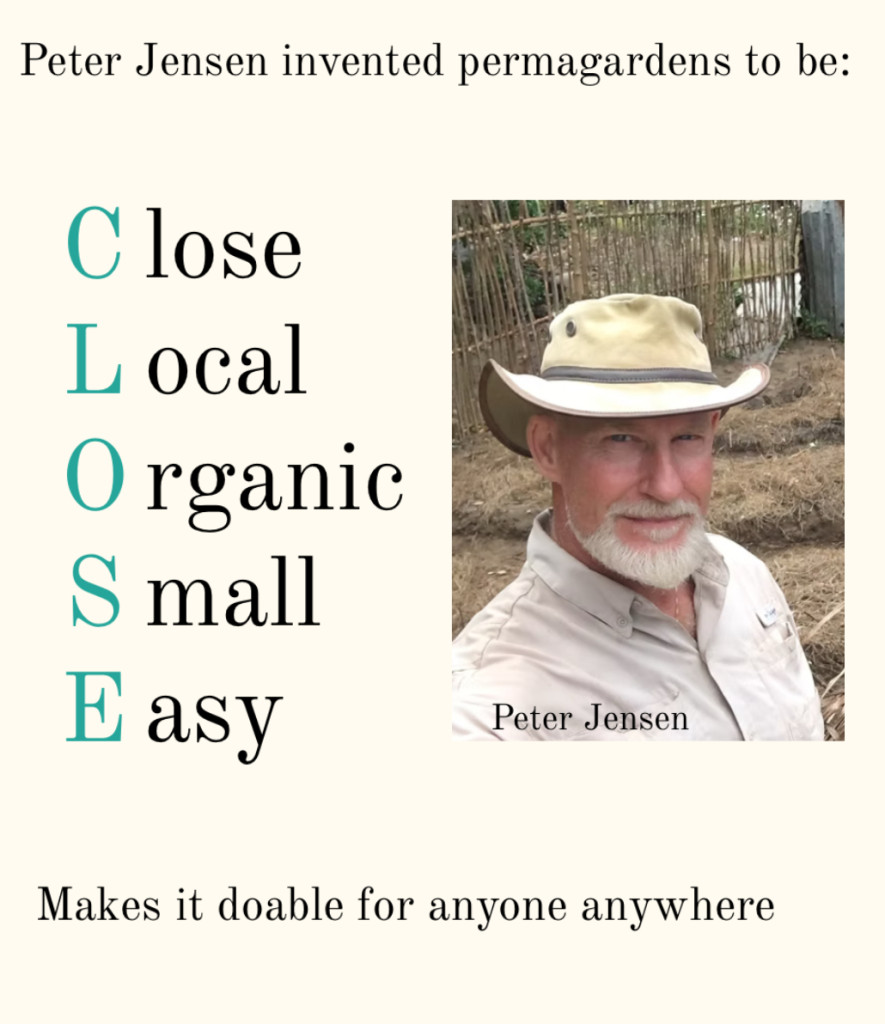
Rule of CLOSE
Kitchen scraps, animal manure, and other organic matter will all help the garden grow. In the permagarden household, said one of our volunteers in India, “There is no waste … it is wealth.”
This page provides an overview, so after reading it you may still wonder, what are the specific technicalities that make this method work so well? Enter your email here to receive a detailed explanation